City shares Vision 2050 priorities at the South African Roads Federation AGM
10 October 2025
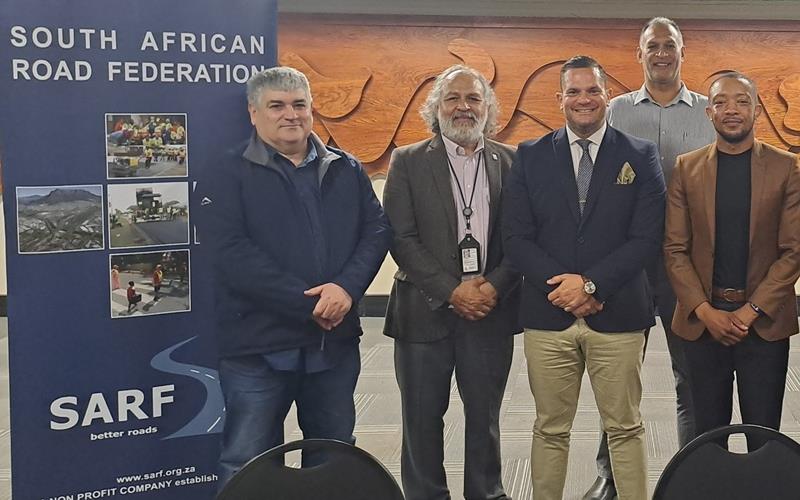
Yesterday, 9 October 2025, the City of Cape Town’s Mayoral Committee Member for Urban Mobility, Councillor Rob Quintas, delivered the keynote address at the South African Roads Federation (SARF) annual general meeting at the DHL Stadium in Cape Town where local road industry officials, experts and administrators shared their expertise, sound road policies and industry developments. The theme for this year was ‘Cape Town’s Vision 2050’.
‘Those of us who work in the transport and mobility space know that our work goes far beyond asphalt, intersections, and traffic lights. Our roads network is the cardiovascular system of the living organism that is the City of Cape Town. Its arteries need to remain clear and healthy, and it supports the beating heart, the pulse, which is our road users, whether they be pedestrians, cyclists, or motorists. If that system is choked or unhealthy, it affects the rest of that living, breathing, and growing organism,’ said the Mayoral Committee Member for Urban Mobility, Councillor Rob Quintas.
‘Vision 2050 is Cape Town’s blueprint for becoming a future-fit city. It is ambitious. It is interconnected. And it is transformative. Cape Town’s Vision 2050 is our long-term plan to build a city that is resilient, inclusive, connected, and future-fit. It’s about creating an urban environment that works for all our residents, whether they walk, use a wheelchair, cycle, drive, or take public transport.’
Under Vision 2050, the City of Cape Town is committed to designing a network that is safe, inclusive, and accessible to every Capetonian which means:
Safer intersections and pedestrian crossings.
Well-marked sidewalks and protected cycle lanes.
Better lighting and visibility in high-risk areas.
Infrastructure that is accessible to people with disabilities.
The City’s Urban Mobility Directorate has seen first-hand how floods, heat and storms test road infrastructure and has adopted an approach that includes:
Integrating stormwater management into road design.
- Using innovative, more sustainable surfacing materials.
- Supporting the transition to low- and zero-emission transport, like electric buses and taxis, with charging-ready depots and networks.
Restoring passenger rail to not only improve mobility and access for our residents, but to relieve pressure on our roads, ensuring their long-term sustainability and efficiency.
‘The South African Roads Federation’s technical expertise is invaluable in research, testing and guiding best practices that keep our infrastructure strong and future-ready. Roads are also catalysts for economic growth. When we build or maintain a road, we’re not just laying tar. We’re unlocking access to jobs, schools, hospitals, and markets. Vision 2050 prioritises roads that connect people to opportunity, especially in historically marginalised communities. Together, let’s keep building. Not just roads, but pathways to connection, opportunity, and dignity.’ Concluded Councillor Quintas.
Caption: Tony Vieira (CoCT), Hilton Scholtz (CoCT), Councillor Rob Quintas, Moegamat Adams (CoCT and current Chairperson) at the back and Mr Bongani Dlamini from the Western Cape Provincial Government (Chief Engineer: Geometric Design).
End
Published by:
City of Cape Town, Media Office